

For many neurodivergent individuals, daily life involves far more effort than others realize. A woman with ADHD often grows up learning to “blend in,” suppress traits, and overcompensate for challenges that remain invisible to those around her. When autism is also part of the picture, the pressure to appear socially typical can become overwhelming.
Masking, the act of hiding neurodivergent traits to conform to social expectations, can help individuals navigate school, work, and relationships. But over time, it creates emotional exhaustion, identity confusion, and burnout. Understanding the lived experience of a woman with ADHD who masks is essential for building compassion and effective support systems.
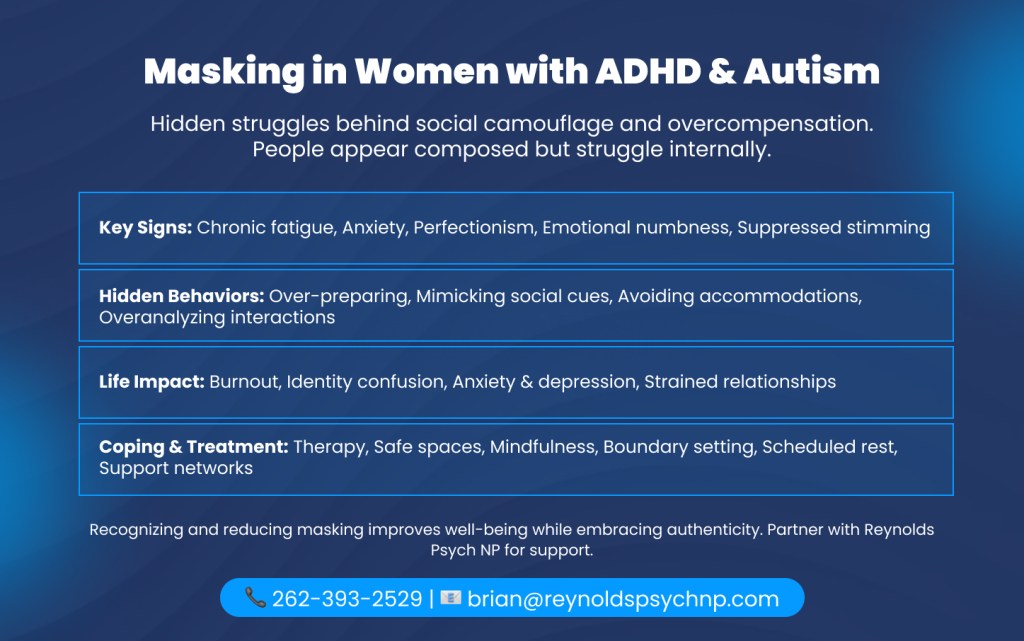
What Is Masking?
Masking refers to consciously or unconsciously suppressing natural behaviors to meet societal norms. A woman with ADHD may imitate peers, rehearse conversations, or hide impulsivity to avoid criticism.
For women with autism symptoms, masking can involve copying facial expressions, forcing eye contact, or suppressing sensory discomfort. While these behaviors may improve social acceptance, they often come at a high psychological cost.
Masking is particularly common among adult women with ADHD because many were never diagnosed in childhood. Instead, they were labeled as “chatty,” “overly emotional,” or “disorganized,” leading them to develop coping strategies that conceal their struggles.
Why Masking Is So Common
Social Expectations
Girls are often expected to be organized, socially aware, and emotionally regulated. A woman who struggles with focus or impulsivity may feel pressure to hide those challenges.
Similarly, autistic symptoms are frequently overlooked because they may present differently than stereotypical male patterns.
Fear of Judgment
Many neurodivergent women report being criticized for being “too much” or “too sensitive.” ADHD masking women often internalize these messages, striving to appear competent at all costs.
Signs of Masking in Daily Life
Masking is not always obvious to others. However, certain patterns frequently appear.
Emotional and Behavioral Indicators
- Chronic exhaustion after social events
- Perfectionism and over-preparation
- Difficulty relaxing in public settings
- Suppressed stimming behaviors
- High anxiety in professional environments
A woman with ADHD might appear high-achieving while privately struggling with hidden ADHD symptoms such as time blindness or emotional dysregulation.
The Cost of Constant Masking
While masking may help someone succeed externally, the internal toll can be severe.
1. Burnout
A woman who constantly monitors her behavior can experience deep mental fatigue. The energy required to maintain a socially acceptable persona drains cognitive resources.
2. Identity Confusion
Over time, it becomes difficult to separate an authentic personality from learned behaviors. Some autistic women describe feeling disconnected from their true selves.
3. Anxiety and Depression
Long-term masking is linked to increased rates of anxiety disorders and depressive symptoms, especially among adult women who feel misunderstood.
Masking at Work
Professional environments often intensify masking behaviors. A woman with ADHD may:
- Double-check emails excessively
- Stay late to compensate for focus challenges
- Avoid asking for accommodations
- Hide sensory sensitivities
Because symptoms may excel academically, their workplace struggles often remain invisible.
Without proper recognition, a woman may push herself beyond healthy limits, increasing the risk of burnout.
Masking in Relationships
Social and romantic relationships can also be complicated. A woman might overanalyze conversations or mimic social cues to maintain harmony.
For autistic women, sensory overwhelm in crowded gatherings can lead to emotional shutdown after prolonged interaction.
The desire to appear “normal” sometimes prevents open communication about needs and boundaries.
Comparison: Masking vs. Authentic Living
| Aspect | Masking | Authentic Expression |
| Energy Use | High mental exhaustion | Sustainable energy levels |
| Social Acceptance | Often improved short-term | May vary |
| Emotional Health | Increased stress | Greater self-acceptance |
| Identity | Confusion over time | Clearer self-awareness |
| Long-Term Impact | Burnout risk | Emotional stability |
Understanding this contrast helps highlight why reducing masking is crucial for well-being.
Recognizing Mental Health Warning Signs
Chronic masking can lead to noticeable mental health warning signs, including:
- Persistent fatigue
- Irritability
- Sleep disturbances
- Loss of interest in activities
- Emotional numbness
A woman with ADHD experiencing these symptoms may benefit from professional evaluation and supportive therapy.
Steps Toward Reducing Masking
Self-Awareness
Acknowledging that masking exists is the first step. Many women with ADHD only realize they have been masking after diagnosis.
Safe Spaces
Creating environments where neurodivergent traits are accepted reduces the need for constant performance.
Therapy and Support
Individual therapy provides a structured space to explore identity and coping patterns. Mental health care in Kenosha and other communities increasingly recognizes the unique presentation of a woman with co-occurring autism.
Practical Adjustments
Daily habits for mental health can include:
- Scheduled downtime after social events
- Sensory-friendly workspaces
- Clear communication of boundaries
- Realistic workload planning
A woman with ADHD who gradually reduces masking often experiences improved emotional balance.
The Importance of Accurate Diagnosis
Many women are diagnosed later in life because symptoms differ from traditional stereotypes. Hidden ADHD symptoms, such as internalized hyperactivity or chronic self-criticism, may go unnoticed.
Women with autism often receive misdiagnoses before proper assessment.
Accurate diagnosis allows a woman to understand her neurological profile and access appropriate support.
Breaking the Stigma
Societal misconceptions contribute to masking. When ADHD masking women feel safe expressing their needs, communities become more inclusive.
Education helps reduce stigma and empowers a woman to seek accommodations without shame.
Professional Support Matters
Individual Psychotherapy & Mental health professionals trained in neurodivergence can provide personalized care. Clinics like Reynolds Psych NP offer specialized approaches tailored to the unique experiences of neurodivergent women.
Through therapy and structured support, a woman with ADHD can learn to balance social expectations with authentic self-expression.
Conclusion
Masking in neurodivergent women is a complex and often invisible struggle. A woman with ADHD may appear composed and capable while privately battling exhaustion and self-doubt. For autistic women, social camouflage can become second nature, yet deeply draining.
Recognizing the emotional cost of masking is essential. By fostering awareness, encouraging open dialogue, and providing professional support, individuals can move toward authenticity and improved mental health.
Reducing masking does not mean abandoning social skills; it means creating room for genuine expression. With understanding and proper care, a woman with ADHD can thrive without sacrificing her well-being.
If you or someone you love is navigating the hidden challenges of masking, reach out to Reynolds Psych NP today at (262) 999-7350 or email [email protected]. Our compassionate team provides personalized support to help you embrace authenticity and strengthen emotional well-being.
FAQs
1. What does masking look like in a woman with ADHD?
Masking may involve suppressing impulsivity, over-preparing for conversations, and hiding emotional overwhelm.
2. Why are adult women with ADHD often diagnosed later?
Symptoms can appear internalized, making them less noticeable in childhood compared to traditional hyperactive presentations.
3. Is masking harmful?
Occasional masking may help in specific situations, but chronic masking can lead to burnout and mental health concerns.
4. How can therapy help reduce masking?
Therapy provides tools for self-awareness, boundary setting, and building confidence in authentic behaviors.
5. Are women with autism more likely to mask than men?
Research suggests symptoms often develop stronger social camouflage strategies, which can delay diagnosis and increase emotional strain.