

We live in a hyperconnected world where notifications never stop. Emails, texts, news alerts, AI tools, and social platforms compete for attention every minute. Over time, this constant stimulation leads to digital burnout, a state of mental and emotional exhaustion caused by prolonged technology use.
Unlike ordinary stress, burnout doesn’t just make you tired. It affects your concentration, emotional regulation, productivity, and even your physical health. As AI tools become more integrated into daily work and personal life, the cognitive load continues to grow.
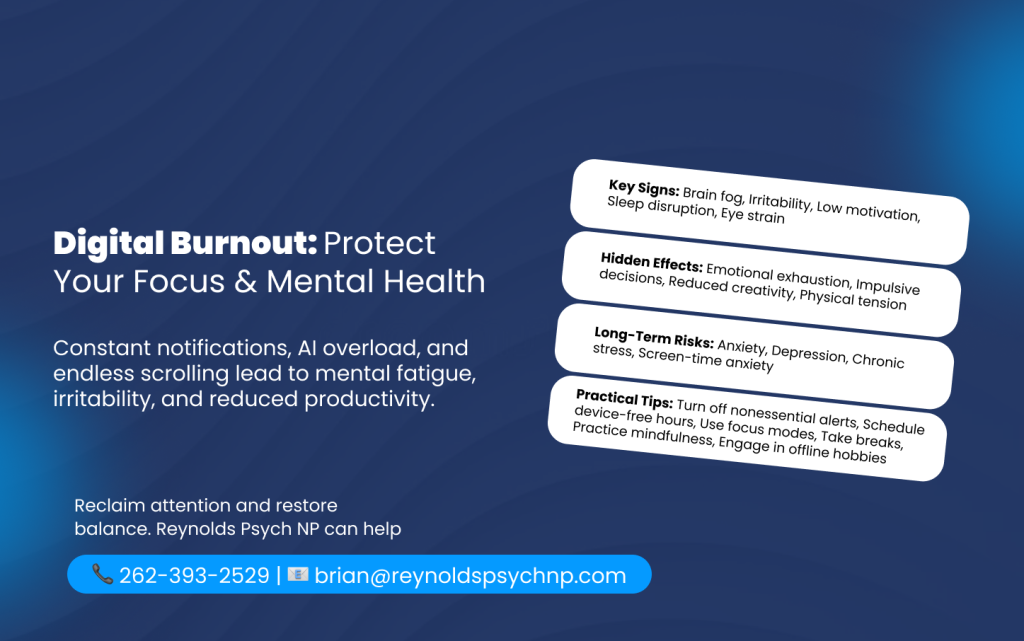
What Is Digital Burnout?
It is a form of exhaustion linked to excessive screen exposure, constant notifications, and cognitive overload from digital systems. It combines elements of workplace burnout with technology fatigue.
While technology improves efficiency, it also eliminates natural mental breaks. When your brain never fully disconnects, stress accumulates.
Key Drivers of Burnout
- Continuous email and messaging alerts
- AI-powered productivity tools require constant input
- Social media scrolling
- Virtual meetings without breaks
- 24/7 accessibility expectations
The result is reduced mental clarity, emotional fatigue, and rising screen time anxiety.
The Psychology Behind Digital Burnout
Your brain is not wired for constant alerts. Each notification triggers a small dopamine spike, pulling your attention away from focused tasks. Over time, these micro-interruptions reduce deep work capacity.
When burnout sets in, the prefrontal cortex—the part responsible for decision-making and focus- becomes fatigued. This leads to impulsivity, irritability, and difficulty completing tasks.
The cycle intensifies when AI tools increase productivity demands. Instead of simplifying work, they sometimes increase expectations, contributing to cognitive overload and worsening burnout.
Signs of Digital Burnout
Recognizing signs of digital burnout early prevents long-term consequences. Many people ignore subtle symptoms until exhaustion becomes overwhelming.
Emotional Signs
- Irritability after screen use
- Feeling mentally drained by emails
- Low motivation
- Increased anxiety
Cognitive Signs
- Brain fog
- Difficulty concentrating
- Reduced creativity
- Slower decision-making
Physical Symptoms
- Headaches
- Eye strain
- Sleep disruption
- Neck and shoulder tension
These burnout symptoms often resemble traditional workplace burnout but are directly linked to technology saturation.
How AI Overload Contributes
Artificial intelligence tools promise efficiency, but they also create new demands. Automated suggestions, predictive analytics, and content generation require constant monitoring and adjustments.
Instead of freeing mental space, AI systems sometimes increase:
- Performance pressure
- Information processing load
- Comparison metrics
- Speed expectations
This contributes to escalating burnout, especially in high-performance environments.
Digital Burnout vs. Traditional Burnout
While similar, they differ in key ways:
| Factor | Traditional Burnout | Digital Burnout |
| Main Cause | Workload stress | Technology overload |
| Recovery Method | Time off work | Tech boundaries + rest |
| Symptoms | Emotional exhaustion | Cognitive + sensory fatigue |
| Triggers | Job pressure | Notifications, screens, AI tools |
| Prevention | Work-life balance | Digital boundaries |
The Impact on Mental Health
Persistent digital burnout can contribute to anxiety, depression, and chronic stress. Overexposure to information increases cortisol levels, keeping the nervous system in a heightened state.
Screen time anxiety develops when individuals feel pressured to stay constantly connected. Notifications become stress triggers rather than helpful reminders.
How to Prevent Digital Burnout
Taking proactive steps can significantly reduce the risk.
Daily Strategies to Prevent Burnout
- Turn off nonessential notifications
- Schedule device-free hours
- Use focus modes during work
- Limit multitasking
- Take 5–10-minute breaks every hour
Weekly Reset Practices
- Plan one full low-screen day
- Audit apps and remove unnecessary ones
- Track screen time patterns
- Reassess AI tool usage
These steps help retrain the brain to tolerate stillness and reduce overstimulation.
Building Healthier Digital Boundaries
Setting boundaries does not mean abandoning technology. It means using it intentionally.
Practical Boundary Techniques
- Establish “no-phone” zones at home
- Avoid checking emails after a set time
- Silence group chats during work hours
- Replace evening scrolling with offline routines
Boundaries reduce the mental load that fuels burnout.
When Digital Burnout Becomes Serious
If symptoms intensify, professional evaluation may help. Severe burnout can resemble clinical anxiety or depressive disorders.
Warning signs include:
- Persistent insomnia
- Panic-like symptoms
- Emotional numbness
- Loss of productivity
- Social withdrawal
For individuals in Wisconsin seeking mental health care in Kenosha, structured support can help address both stress and underlying psychiatric concerns.
At Reynolds Psych NP, comprehensive evaluations assess whether symptoms stem from lifestyle overload or deeper mental health conditions. In cases where burnout significantly impacts employment, FMLA Evaluation and Disability Evaluation services may provide documentation support.
Rewiring the Brain After Burnout
Recovery requires more than unplugging for a weekend. The brain needs consistent periods of reduced stimulation.
Neuro-Reset Techniques
- Mindfulness meditation
- Outdoor walks without devices
- Analog hobbies (reading, journaling, art)
- Deep breathing exercises
- Sleep hygiene improvement
These activities restore neural balance and counteract burnout.
The Role of Sleep and Recovery
Technology disrupts natural sleep cycles. Blue light suppresses melatonin, delaying rest. When sleep suffers, emotional regulation weakens.
Protecting sleep is one of the most effective strategies.
- Stop screen use 60 minutes before bed
- Keep devices out of the bedroom
- Use dim lighting at night
- Maintain a consistent bedtime
Sleep restoration improves focus and mood stability.
Workplace Solutions to Reduce Burnout
Employers also play a role. Organizational changes can dramatically reduce technology-related exhaustion.
Helpful Workplace Policies
- Meeting-free focus blocks
- Email-free weekends
- Reduced after-hours messaging
- Clear AI usage expectations
- Digital wellness training
Addressing systemic contributors helps lower collective burnout in teams.
Reclaiming Attention in an AI-Driven World
Attention is a finite resource. Every notification competes for it. Protecting your focus is not selfish—it is necessary.
Intentional digital use strengthens:
- Productivity
- Emotional resilience
- Creative thinking
- Relationship quality
By recognizing early digital burnout symptoms and adjusting habits, long-term mental health improves.
Conclusion
Technology is not the enemy. Unchecked exposure is. Digital burnout develops gradually but can significantly impact emotional well-being, productivity, and relationships.
By identifying warning signs, setting boundaries, and prioritizing recovery habits, you can regain control over your attention and energy. If symptoms persist or interfere with daily functioning, professional support can help clarify next steps.
Protecting your mental clarity in a hyperconnected world is not optional; it’s essential.
If burnout is affecting your focus, mood, or work performance, professional guidance can help. Professionals offer compassionate mental health evaluations and personalized treatment options. A disability psychiatric evaluation may include structured psychiatric evaluation questions to understand symptom severity and functional limitations.
Contact Reynolds Psych NP today at (262) 999-7350 or email [email protected] to regain clarity, restore balance, and build healthier digital habits for lasting well-being.
Frequently Asked Questions
1. What is digital burnout?
Burnout is mental and emotional exhaustion caused by prolonged exposure to screens, notifications, and AI-driven demands.
2. How do I know if I have burnout?
Common signs of burnout include irritability, brain fog, sleep problems, and reduced productivity linked to excessive screen use.
3. Can digital burnout cause anxiety?
Yes. Continuous notifications and overstimulation can increase stress hormones and contribute to screen time anxiety.
4. How long does it take to recover from burnout?
Recovery varies. Mild cases may improve within weeks of consistent digital boundaries, while severe cases may require professional support.
5. When should I seek professional help?
If symptoms interfere with work, relationships, or sleep for several weeks, a mental health evaluation may provide helpful guidance.