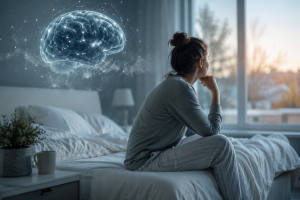

In a world where information never sleeps, many people find themselves endlessly refreshing news feeds late into the night. What begins as a quick update often turns into hours of scrolling through alarming headlines. The connection between doomscrolling and anxiety is becoming increasingly clear, as mental health professionals observe rising stress levels tied to digital habits.
The cycle is simple: negative news triggers fear, which drives more scrolling in search of reassurance—yet reassurance rarely comes. Instead, doomscrolling and anxiety reinforce one another, creating a loop that can be difficult to break.
Understanding what happens in your brain during this cycle is the first step toward regaining control.
What Is Doomscrolling?
“Doomscrolling” refers to compulsively consuming negative news or distressing online content for extended periods. It often occurs on social media platforms, news apps, or discussion forums.
While staying informed is important, anxiety often escalates when individuals repeatedly expose themselves to crisis-driven narratives.
Many people experiencing social media anxiety report feeling unable to disconnect, even when scrolling increases stress.
The Brain on Constant News Feeds
The Stress Response System
When you encounter alarming content, your brain activates the amygdala—the region responsible for detecting threats. This triggers the release of stress hormones like cortisol and adrenaline.
Repeated exposure strengthens the link between doomscrolling and anxiety, conditioning your brain to expect danger.
Dopamine and Compulsion
Ironically, scrolling also activates dopamine pathways associated with reward. Each new post offers the possibility of fresh information, keeping you hooked.
The combination of threat activation and reward anticipation fuels doomscrolling anxiety, making it hard to stop.
Doomscrolling Effects on Brain Function
Research suggests that excessive exposure to negative media can:
- Heighten emotional reactivity
- Reduce concentration
- Disrupt sleep cycles
- Increase irritability
- Impair decision-making
The relationship between scrolling and anxiety intensifies when these neurological changes become chronic.
Signs That News Consumption Is Affecting You
It can be difficult to recognize when normal media use crosses into harmful territory. However, warning signs include:
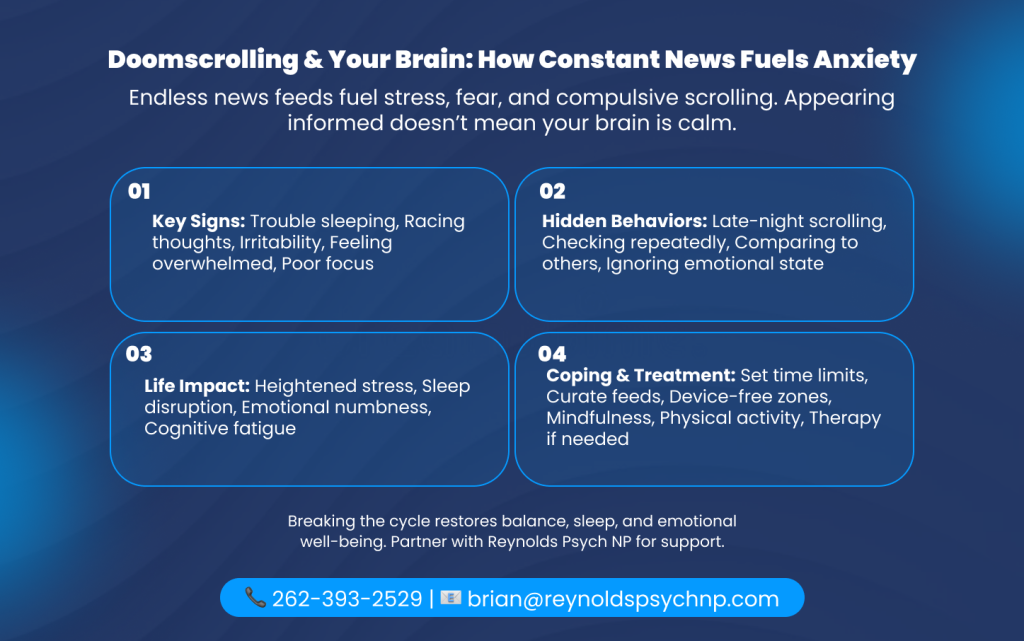
- Trouble sleeping after checking the news
- Racing thoughts about global events
- Difficulty focusing at work
- Increased heart rate while scrolling
- Feeling helpless or overwhelmed
When doomscrolling and anxiety begin to affect daily functioning, it may be time to reassess habits.
How Social Platforms Amplify Anxiety
Algorithms prioritize emotionally charged content because it generates engagement. Unfortunately, this often means highlighting crises, conflict, and sensational headlines.
Social media anxiety increases when individuals compare their lives to curated posts or absorb continuous negative updates.
Comparison: Healthy Media Use vs. Doomscrolling
| Aspect | Healthy Media Habits | Doomscrolling Pattern |
| Duration | Time-limited | Hours without awareness |
| Emotional Impact | Informative but balanced | Heightened fear |
| Sleep Quality | Unaffected | Disrupted |
| Cognitive Focus | Stable | Distracted |
| Stress Level | Manageable | Elevated |
Understanding this contrast highlights how scrolling and anxiety can reshape mental well-being.
Why Negative News Feels So Compelling
Humans evolved to prioritize threat detection. This “negativity bias” makes alarming headlines more attention-grabbing than positive ones.
In the digital age, constant alerts exploit this bias. The cycle of doomscrolling and anxiety becomes self-perpetuating because your brain interprets each update as urgent.
The Impact on Sleep and Memory
Late-night scrolling disrupts circadian rhythms. Blue light exposure suppresses melatonin production, making it harder to fall asleep.
Sleep deprivation intensifies anxiety by reducing emotional regulation capacity. Over time, the cumulative effects of scrolling and anxiety impair memory consolidation and cognitive clarity.
Emotional Consequences of Chronic Exposure
Long-term exposure to distressing content can lead to:
- Persistent worry
- Emotional numbness
- Irritability
- Feelings of helplessness
- Reduced motivation
Practical Steps to Break the Cycle
1. Set Time Limits
Use timers to restrict media consumption to designated windows. Limiting exposure reduces the intensity of doomscrolling and anxiety.
2. Curate Your Feed
Unfollow accounts that consistently trigger stress. Replacing them with balanced or uplifting sources reduces social media anxiety.
3. Create Device-Free Zones
Avoid checking the news in bed or during meals. Physical boundaries help disrupt anxiety patterns.
4. Practice Mindful Awareness
Pause and notice your emotional state before and after scrolling. Recognizing shifts can weaken the automatic link between doomscrolling and anxiety.
When to Seek Professional Support
If distress persists despite behavioral changes, professional guidance may help.
Long term psychiatric care provides tools for managing rumination and stress responses.
For individuals experiencing severe or prolonged symptoms, long-term psychiatric care may be appropriate.
Clinics like Reynolds Psych NP offer comprehensive mental health services tailored to individual needs.
Building Healthier Digital Habits
Adopting healthier patterns requires consistency.
Daily Practices to Reduce Stress
- Morning routines without phone use
- Scheduled news check-ins
- Breathing exercises
- Physical activity
- Offline hobbies
The Role of Community and Perspective
Connecting with others offline can counteract feelings of isolation amplified by online content.
Individual Psychotherapy and engaging in meaningful conversations shift focus from catastrophic headlines to shared human experiences, helping reduce doomscrolling anxiety.
Conclusion
Constant exposure to negative news reshapes brain chemistry, emotional regulation, and sleep patterns. The link between doomscrolling and anxiety is not imaginary; it is rooted in neurological responses to perceived threat and reward cycles.
By understanding how digital habits affect your brain, you can make intentional changes that protect your mental health. Setting boundaries, curating content, and seeking professional support when needed all contribute to restoring balance.
Information is valuable, but well-being is essential. Breaking the cycle of doomscrolling and anxiety empowers you to stay informed without sacrificing peace of mind.
Articles such as “How To Stop Overthinking” and “What type of therapy is right for me” offer helpful starting points for exploring options.
If constant news feeds are affecting your emotional well-being, contact Reynolds Psych NP today at (262) 999-7350 or email [email protected]. Our compassionate team can help you develop healthier coping strategies and regain control over stress and anxiety.
Frequently Asked Questions (FAQs)
1. What is doomscrolling?
Doomscrolling is the habit of compulsively consuming negative news content for extended periods.
2. How do doomscrolling and anxiety connect?
Repeated exposure to distressing information activates the brain’s stress response, reinforcing anxious feelings.
3. Can limiting screen time really help?
Yes. Setting boundaries reduces stress hormone activation and improves sleep quality.
4. When should I seek therapy?
If anxiety interferes with daily functioning, relationships, or sleep, professional support may be beneficial.
5. Is all social media harmful?
Not necessarily. Balanced use with intentional boundaries can minimize anxiety from social media while maintaining connection.