
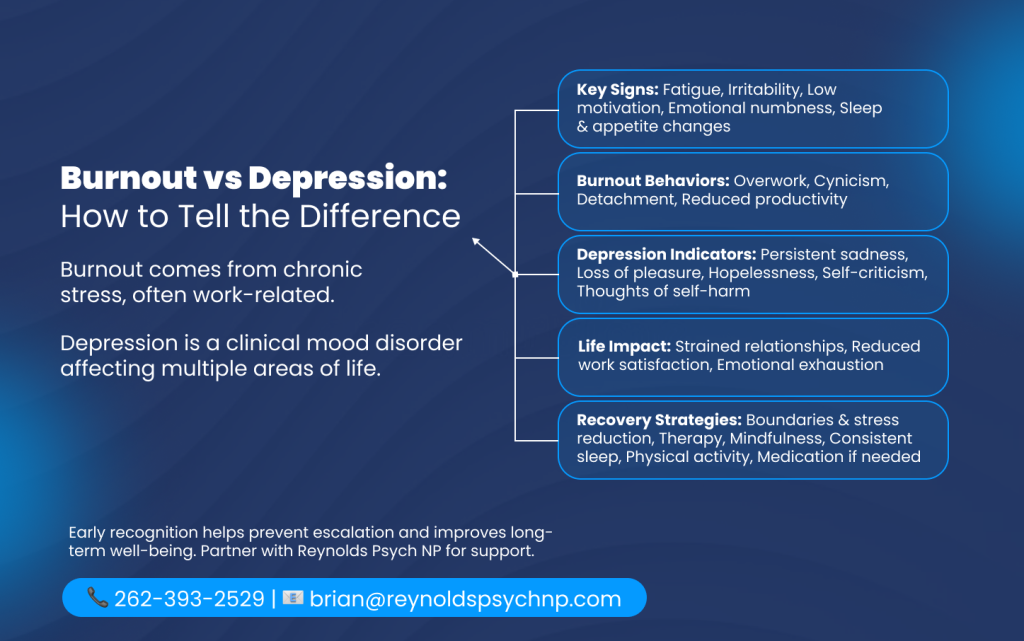
The conversation around burnout vs depression has become increasingly important as more adults report chronic stress and emotional fatigue. While both conditions involve exhaustion and low mood, they are not the same.
Burnout is typically linked to prolonged stress, often related to work or caregiving responsibilities. Depression, on the other hand, is a clinical mood disorder that affects thoughts, emotions, behavior, and physical health across multiple areas of life.
Because symptoms overlap, many people struggle to identify what they are experiencing. Understanding the distinction is essential for choosing the right support and treatment path.
What Is Burnout?
Burnout is a state of emotional, physical, and mental exhaustion caused by prolonged stress. It most commonly appears in professional environments but can affect caregivers, students, and parents.
Burnout develops gradually. It often begins with high expectations and overcommitment, followed by frustration, cynicism, and detachment.
Common Mental Exhaustion Signs
- Chronic fatigue despite rest
- Irritability or frustration
- Reduced motivation
- Difficulty concentrating
- Emotional numbness at work
These mental exhaustion signs are often situational and may improve with rest or environmental changes.
What Is Depression?
Depression is a clinical condition that impacts mood, cognition, sleep, appetite, and overall functioning. Unlike burnout, depression is not limited to one domain of life.
Individuals experiencing depression vs burnout often notice that depressive symptoms persist even during vacations or breaks from stressors.
Depression can interfere with relationships, self-esteem, and daily functioning, regardless of work conditions.
Key Differences in Symptoms
Distinguishing burnout vs depression requires examining symptom patterns and duration. Burnout is typically work-related, while depression affects multiple areas of life.
The discussion around depression vs burnout symptoms highlights that depression includes persistent sadness, hopelessness, and loss of interest beyond occupational stress.
Burnout Symptoms vs Depression
Symptoms often differ in scope. Burnout may involve detachment from work and reduced productivity, whereas depression involves broader emotional and physical symptoms.
Burnout and depression may appear similar initially, but depression often includes changes in sleep, appetite, and self-worth. Understanding symptoms helps guide appropriate intervention.
Emotional Burnout vs Depression
The phrase burnout vs depression describes a common area of confusion. Emotional burnout is tied to prolonged stress exposure, while depression is internally driven and not always linked to an external trigger.
People experiencing emotional burnout vs depression may report exhaustion in both scenarios, but depression often includes persistent feelings of worthlessness or guilt.
In burnout, relief may occur after time off or boundary adjustments. In depression, symptoms tend to remain despite a reduced workload, and treatment may involve addressing challenges in medication management.
Duration and Impact
One of the most significant differences in burnout vs depression is duration. Burnout improves when stressors are reduced. Depression may persist for weeks or months, even without external pressure.
When comparing depression vs burnout, it is helpful to evaluate whether symptoms disappear during rest. If mood remains low during vacations or time away from responsibilities, depression may be more likely.
Warning Signs That Suggest Depression
- Persistent sadness unrelated to work
- Loss of pleasure in hobbies
- Changes in appetite or sleep
- Feelings of hopelessness
- Thoughts of self-harm
If these appear, professional support is essential.
Overlapping Symptoms
Although distinct, depression vs burnout symptoms can overlap. Both may involve fatigue, irritability, and reduced concentration.
Burnout vs depression symptoms sometimes coexist. Prolonged burnout may increase vulnerability to depression if stress remains unaddressed. Recognizing symptoms early prevents escalation into more severe mental health conditions.
When Professional Help Is Needed
If symptoms interfere with daily functioning, a professional evaluation can clarify the diagnosis. Long term psychiatric care may be appropriate for individuals with persistent depressive symptoms.
A structured assessment helps determine whether someone is experiencing burnout vs depression or both. Accurate diagnosis guides targeted treatment.
In some cases, medication management may be recommended for moderate to severe depression.
Role of Medication and Therapy
Many individuals ask whether medication is necessary. The answer depends on symptom severity and duration.
For depression, medication combined with therapy can be highly effective. However, there are challenges, including dosage adjustments and monitoring side effects.
Burnout, in contrast, may respond better to lifestyle adjustments and stress reduction strategies.
Comparison Table: Burnout vs Depression
| Feature | Burnout | Depression |
| Primary Trigger | Work or chronic stress | Internal mood disorder |
| Scope | Situation-specific | Affects all areas of life |
| Relief with Rest | Often improves | Rarely improves fully |
| Physical Symptoms | Fatigue | Sleep & appetite changes |
| Treatment Focus | Stress reduction | Therapy + possible medication |
Daily Strategies for Recovery
Addressing burnout vs. depression requires different strategies. Burnout responds to boundaries and workload adjustments. Depression requires clinical attention.
Daily Habits That Support Recovery
- Establish consistent sleep routines
- Schedule breaks and downtime
- Maintain physical activity
- Limit overcommitment
- Practice daily habits for mental health
Healthy structure supports both prevention and recovery.
Why Early Identification Matters
Failing to distinguish burnout from depression can delay effective treatment. Mislabeling depression as burnout may prevent individuals from seeking necessary care.
Similarly, assuming depression when the issue is burnout can lead to unnecessary medication without addressing environmental stressors.
Evaluating mental exhaustion signs carefully ensures accurate intervention and better long-term outcomes.
Take Away
Understanding burnout vs depression is critical for protecting long-term emotional health. While both conditions involve fatigue and low motivation, their causes and treatments differ significantly. Burnout often stems from chronic stress and improves with rest and boundaries. Depression is a clinical condition requiring structured care and, in some cases, medication.
If you are unsure whether you are experiencing burnout or depression, a professional evaluation can provide clarity and direction. Reynolds Psych NP offers compassionate, evidence-based support tailored to your needs. Contact Reynolds Psych NP at (262) 999-7350 or email[email protected] to schedule a confidential consultation and take the first step toward lasting mental wellness.
FAQs
1. What is the main difference between burnout vs depression?
Burnout is stress-related and situation-specific, while depression is a clinical mood disorder affecting multiple life areas.
2. Can burnout turn into depression?
Yes, prolonged untreated burnout can increase vulnerability to depression.
3. How do I know if I need medication?
If symptoms persist beyond situational stress and impact daily functioning, professional evaluation is recommended.
4. Do burnout and depression feel the same?
They can overlap, but depression includes broader mood and physical changes.
5. When should I seek professional help?
If symptoms last more than two weeks, worsen, or include hopelessness, seek clinical support promptly.