
A lot of people hear the words “medication management” in mental health and assume it means one thing: you talk to a provider, get a prescription, and that’s it. Maybe a refill every few months. Maybe a quick check-in.
That’s not how it’s supposed to work. And when it’s done properly, it looks very different from what most people expect.
So, let’s talk honestly about what medication management in mental health actually is, and why it plays such an important role in psychiatric care.
What is Medication Management in Mental Health
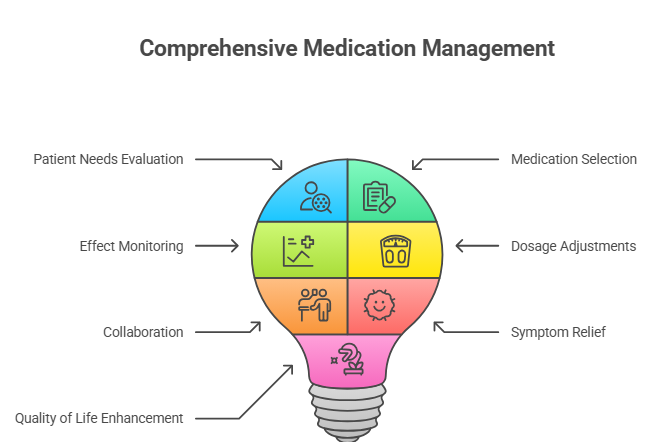
Medication management is an ongoing relationship between a patient and a psychiatric provider. It involves careful decision-making, regular follow-ups, and a lot of listening.
It starts with understanding what a person is experiencing day to day. Not just symptoms on paper, but how those symptoms affect sleep, work, relationships, focus, and emotional balance.
At Reynolds Psych NP, medication management isn’t about reacting quickly. It’s about making thoughtful choices and revisiting them as life changes.
Prescribing Is Only One Small Part of the Process
Writing a prescription is often the shortest part of a medication management visit.
The larger part is the conversation that comes before and after. A good provider asks questions like:
- What feels hardest right now?
- What has helped in the past?
- What hasn’t?
- How does your body usually respond to medications?
- What are you concerned about starting treatment?
These details matter because mental health medications don’t work the same way for everyone. Two people can take the same medication and have completely different experiences.
That’s why psychiatric medication management is a process, not a decision made in a single visit.
Why Ongoing Medication Management Is So Important
Mental health symptoms aren’t static. Stress changes. Sleep changes. Life happens. Medications that once worked well may need adjustment over time.
Without regular medication monitoring, people can end up:
- Staying on a dose that no longer fits
- Ignoring side effects because they feel unsure how to bring them up
- Feeling discouraged when progress stalls
- Stopping medication abruptly without guidance
Medication management exists to prevent these situations and to make sure treatment keeps working with you, not against you.
What a Medication Management Appointment Feels Like
Many patients come in feeling nervous, especially if this is their first time discussing psychiatric medication. That reaction is completely understandable.
A proper medication management appointment should feel like a conversation, not an interrogation. You should feel heard, not rushed.
Your provider may ask about mood, focus, energy, sleep, appetite, and stress levels. They may review medical history or past medication experiences. Most importantly, they should explain things in a way that makes sense not medical jargon.
At Reynolds Psych NP, patients are encouraged to ask questions and take an active role in decisions about their care.
Conditions That May Benefit from Medication Management
Medication management can be helpful for many mental health concerns, including:
- Anxiety that interferes with daily life
- Depression that doesn’t improve with coping strategies alone
- ADHD affecting focus, organization, or work performance
- Mood disorders that require stabilization
Medication is never treated as a cure-all. Sometimes it’s part of treatment. Sometimes it’s temporary. Sometimes it’s adjusted or discontinued. The plan evolves based on the person not the diagnosis.
Medication and Therapy Work Best Together
One of the most common misunderstandings is that medication replaces therapy. In reality, the two often support each other.
Medication may reduce symptoms enough to make individual psychotherapy more effective. Therapy, in turn, helps people build skills that reduce long-term reliance on medication.
At Reynolds Psych NP, medication management is often coordinated alongside therapy recommendations, creating a balanced approach to care.
Follow-Ups Are Where Real Progress Happens
The most important part of medication management often happens after the medication is started.
Follow-up visits allow time to talk about what’s working and what isn’t. Side effects can be addressed early. Dosages can be adjusted carefully. Sometimes a medication is changed entirely and that’s okay.
These follow-ups are not “check-the-box” visits. They are essential to safe and effective psychiatric care.
Medication Management Through Telehealth
For many patients, telehealth medication management makes staying consistent with care much easier.
Virtual visits remove travel time and scheduling stress while still allowing meaningful conversation and symptom monitoring. When done responsibly, telehealth provides the same level of clinical attention as in-person visits.
At Reynolds Psych NP, telehealth appointments are handled with the same care, privacy, and professionalism as office-based visits.
Addressing Common Worries About Mental Health Medication
It’s normal to have concerns before starting medication. Some common ones include:
“Will I lose control over my emotions?”
The goal is emotional stability, not emotional numbness.
“Will I need to stay on this forever?”
Not always. Treatment decisions are reviewed over time.
“What if I don’t like how it makes me feel?”
That’s part of why ongoing medication management exists to adjust or change treatment when needed.
These conversations are an important part of ethical psychiatric care.
Why Thoughtful Medication Management Matters
Medication management requires patience, communication, and experience. When done well, it helps people feel more stable, more present, and more able to engage in daily life.
At Reynolds Psych NP, medication decisions are made carefully, explained clearly, and revisited regularly. Patients are partners in the process not passive recipients.
Final Thoughts
So, what is medication management in mental health?
It’s not just about medication. It’s about guidance, follow-through, and care that adapts as a person’s life changes.
When done properly, medication management becomes a supportive part of mental health treatment not something to fear or rush into