

In today’s always-on world, late-night scrolling, demanding work schedules, and constant stress are robbing people of rest. The result? sleep debt; a growing health issue that affects mood, cognition, and emotional stability.
Many people underestimate how dangerous sleep deprivation can be. Missing an hour here and there may not seem serious, but those lost hours accumulate. Over time, your brain and body pay the price.
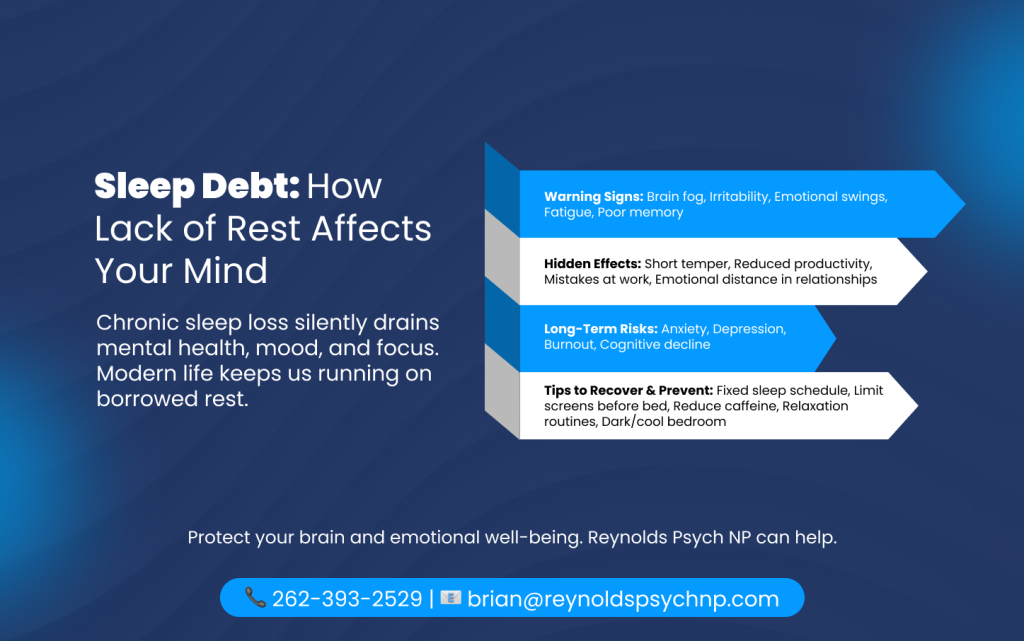
What Is Sleep Debt?
Simply put, sleep debt is the difference between the amount of sleep your body needs and the amount you actually get. If you need eight hours per night but consistently sleep six, you build two hours of debt each day.
Unlike financial debt, you cannot fully “pay back” debt with a single long nap. Recovery takes time and consistency.
How It Accumulates
- Staying up late for work or entertainment
- Waking early due to responsibilities
- Shift work or irregular schedules
- Stress and racing thoughts at night
When this pattern continues, debt becomes chronic and begins affecting both mental and physical health.
The Science Behind Sleep and Mental Health
Sleep plays a critical role in emotional regulation, memory consolidation, and stress response. During deep sleep stages, the brain processes experiences and resets neurotransmitters.
When sleep debt builds, the brain’s ability to regulate emotions weakens. Research shows the amygdala, the brain’s emotional center, becomes more reactive, increasing anxiety and irritability.
Over time, untreated debt may contribute to:
- Mood instability
- Depression symptoms
- Reduced stress tolerance
- Difficulty concentrating
This connection between mental health and insomnia is especially significant for people already managing anxiety or depressive disorders.
Common Sleep Debt Symptoms
Mental evaluation for disability recognizes that early intervention can prevent deeper mental health complications.
Emotional Symptoms
- Irritability
- Low frustration tolerance
- Increased sensitivity
- Persistent fatigue
Cognitive Symptoms
- Brain fog
- Poor memory retention
- Slower reaction time
- Reduced decision-making ability
Physical Signs
- Frequent headaches
- Weakened immunity
- Appetite changes
- Hormonal imbalances
How Modern Life Fuels Sleep Debt
Our culture often glorifies productivity and long hours. Technology keeps us connected 24/7. Unfortunately, this lifestyle directly contributes to debt.
Key Contributors
- Blue light exposure before bed
- Work emails late at night
- Social media stimulation
- High caffeine consumption
- Irregular schedules
The lack of sleep effects extend beyond tiredness. Long-term patterns can alter cortisol levels, increasing stress hormones and fueling anxiety.
Sleep Debt and the Brain: What Happens Internally?
The doom-and-gloom headlines are not exaggerated. The effects of poor sleep are measurable in brain scans.
Here’s what chronic debt can cause:
- Reduced prefrontal cortex activity (impairs reasoning)
- Heightened amygdala reactivity (emotional overdrive)
- Lower serotonin production (mood regulation disruption)
- Impaired hippocampus function (memory problems)
Over time, chronic debt increases vulnerability to mood disorders and may worsen existing psychiatric conditions.
Comparing Healthy Sleep vs Sleep Debt
| Factor | Healthy Sleep | Sleep Debt |
| Mood Stability | Balanced emotions | Irritability & mood swings |
| Focus | Clear thinking | Brain fog |
| Stress Response | Controlled | Heightened reactivity |
| Immune Function | Strong | Weakened |
| Long-Term Mental Health | Protected | Increased risk of anxiety & depression |
The Emotional Impact of Chronic Sleep Debt
When chronic sleep debt persists, emotional regulation becomes significantly impaired. Small stressors feel overwhelming. You may snap at loved ones or feel emotionally numb.
Sleep deprivation anxiety is common because a lack of rest heightens cortisol levels. Elevated stress hormones make it harder to fall asleep—creating a vicious cycle.
The longer this continues, the more difficult it becomes to restore natural sleep rhythms.
How Sleep Debt Affects Work and Relationships
Sleep problems rarely stay isolated. They spill into daily life.
At Work
- Reduced productivity
- Increased errors
- Poor problem-solving
- Workplace conflict
In Relationships
- Short temper
- Withdrawal
- Miscommunication
- Emotional distance
Over time, debt can erode confidence and contribute to burnout.
Can You Fully Recover From Sleep Debt?
The good news: yes, recovery is possible. However, quick fixes rarely work.
You cannot erase months of debt in one weekend. Instead, aim for gradual consistency.
Recovery Strategies
- Maintain a fixed bedtime and wake time
- Limit screen exposure 60 minutes before sleep
- Reduce caffeine after 2 PM
- Practice relaxation exercises
- Create a dark, cool sleep environment
Addressing chronic debt requires patience and structure.
When Sleep Debt Signals a Larger Issue
Sometimes persistent sleep struggles indicate underlying conditions such as:
- Anxiety disorders
- Depression
- Hormonal imbalances
- Chronic stress
- Trauma-related sleep disturbances
If sleep problems continue despite lifestyle adjustments, seeking professional support may be necessary.
Individuals struggling with severe sleep disruptions may benefit from comprehensive psychiatric care to address both sleep and mental health concerns.
In cases where sleep issues interfere with employment, FMLA Evaluation and Disability Evaluation services can help determine eligibility for medical leave.
Practical Steps to Prevent Debt
Preventing debt is more effective than treating it.
Daily Prevention Habits
- Go to bed at the same time nightly
- Avoid heavy meals before bed
- Keep electronics out of the bedroom
- Use blackout curtains
- Engage in calming nighttime routines
Weekly Reset Habits
- Schedule downtime
- Limit weekend oversleeping
- Track sleep patterns
- Evaluate stress triggers
These habits protect long-term mental resilience.
The Long-Term Mental Health Risks
Untreated debt increases vulnerability to:
- Major depressive episodes
- Generalized anxiety disorder
- Cognitive decline
- Emotional instability
- Burnout
Over the years, the cumulative effects of poor sleep can become deeply ingrained.
Addressing debt early protects brain health and emotional stability.
Conclusion
Modern life makes it easy to accumulate sleep debt without realizing the cost. What starts as minor exhaustion can evolve into emotional instability, anxiety, and impaired thinking.
Your brain depends on consistent rest. If you’re noticing mood swings, brain fog, or debt symptoms that persist, it may be time to evaluate your routines—or seek professional guidance.
Rebuilding healthy sleep habits is one of the most powerful steps you can take for your mental health.
If persistent debt is affecting your mood, focus, or daily functioning, professional support can make a difference. A psych evaluation for disability may also clarify how significantly sleep challenges impact functioning.
Don’t wait for exhaustion to worsen. Contact Reynolds Psych NP today at (262) 999-7350 or email [email protected] and take the first step toward healthier sleep and stronger mental wellness.
Frequently Asked Questions
1. How long does it take to recover from debt?
Recovery time depends on severity. Mild sleep loss may improve within days, while chronic debt can take weeks of consistent sleep routines.
2. Can naps help reduce debt?
Short naps can improve alertness, but they do not fully eliminate accumulated debt.
3. Is sleep debt the same as insomnia?
No. Insomnia involves difficulty falling or staying asleep, while debt refers to accumulated sleep loss over time.
4. Can debt cause anxiety?
Yes. Sleep deprivation anxiety is common because poor sleep increases stress hormone levels and emotional reactivity.
5. When should I seek professional help?
If sleep problems persist for several weeks, interfere with work or relationships, or worsen mental health symptoms, professional evaluation is recommended.