

Men’s mental health is often shaped by cultural expectations that prioritize strength, independence, and emotional restraint. From an early age, many men are taught to suppress vulnerability and solve problems silently. While resilience can be beneficial, emotional avoidance often creates long-term consequences.
Avoiding emotional discomfort does not eliminate stress. Instead, suppressed emotions tend to resurface through irritability, physical symptoms, or burnout. Recognizing these patterns is essential to improving overall well-being.
Conversations about men and mental health are becoming more common, yet stigma still prevents many from seeking support.
Why Emotional Avoidance Feels Safer
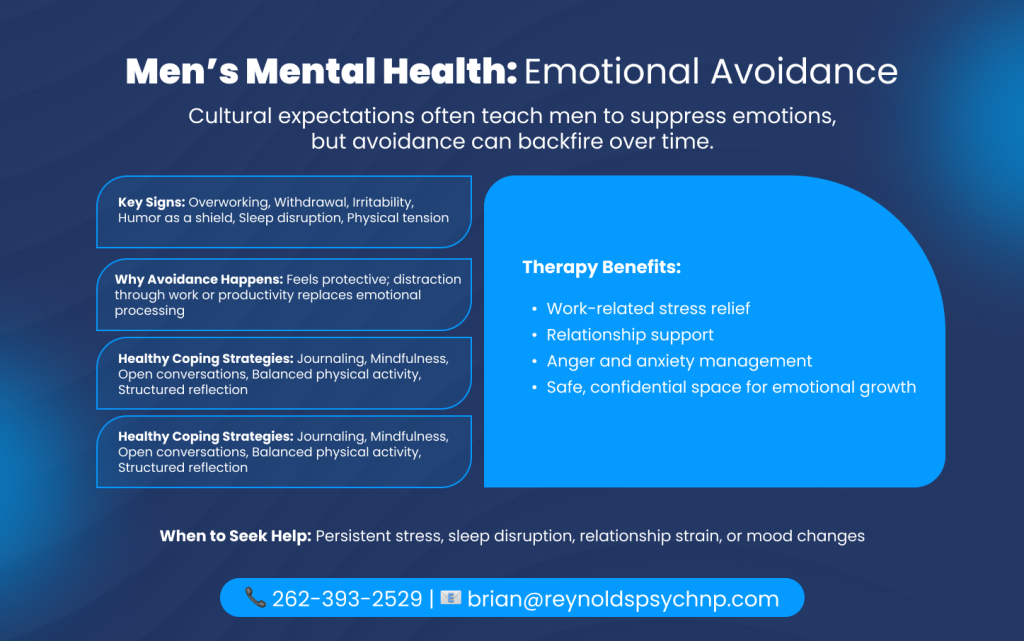
Emotional avoidance can feel protective. For many men coping with stress, distraction through work, exercise, or productivity becomes the default strategy.
While these outlets are not inherently unhealthy, they can become problematic when they replace emotional processing. Avoidance often delays resolution and increases internal pressure.
Common Avoidance Patterns
- Overworking to suppress stress
- Withdrawing from conversations about feelings
- Using humor to deflect vulnerability
- Ignoring early signs of burnout
Over time, avoidance may increase anxiety and strain relationships.
How Avoidance Impacts Men’s Mental Health
When emotions are consistently pushed aside, men’s mental health can deteriorate gradually. Emotional suppression activates stress responses that affect sleep, concentration, and mood regulation.
Some men may not identify sadness as depression. Instead, symptoms appear as irritability, anger, or chronic fatigue. Understanding the difference between anxiety and depression can help clarify underlying emotional struggles.
Emotional avoidance does not eliminate distress; it amplifies it over time.
Men Coping with Stress: Healthy vs Unhealthy Strategies
Men coping with stress often rely on action-oriented behaviors. Physical activity, goal setting, and structured routines can be beneficial.
However, unhealthy coping mechanisms may include substance use, emotional withdrawal, or excessive risk-taking. These patterns mask distress rather than resolve it.
Healthier Coping Alternatives
- Structured reflection or journaling
- Open conversations with trusted individuals
- Mindfulness exercises
- Physical activity balanced with rest
Intentional coping strategies protect men’s mental health in sustainable ways.
Emotional Intelligence and Mental Strength
Developing men emotional intelligence strengthens relationships and resilience. Emotional intelligence involves recognizing, understanding, and expressing emotions constructively.
Men emotional intelligence does not weaken masculinity. Instead, it enhances communication, leadership, and stress management.
Building awareness of emotional patterns helps reduce impulsive reactions and supports long-term stability.
Therapy for Men: Breaking the Stigma
Despite growing awareness, many hesitate to pursue therapy for men due to fear of judgment. Cultural narratives often portray therapy as unnecessary or weak.
In reality, therapy for men provides practical tools to manage stress, improve communication, and address anxiety or depression.
It creates a structured environment where patterns of avoidance, anger, or withdrawal can be explored without judgment. Through guided conversations and skill-building techniques, men learn how to regulate emotional responses, challenge unhelpful thought patterns, and strengthen relationships. Over time, therapy supports clearer decision-making, greater self-awareness, and long-term emotional stability.
What Therapy Can Address
- Work-related stress
- Relationship conflict
- Anger management
- Anxiety and depressive symptoms
Individual Psychotherapy offers a confidential space to explore these concerns without stigma.
Recognizing Warning Signs
When avoidance persists, symptoms can intensify. Men may experience sleep disruption, persistent irritability, or emotional numbness. Mens mental health challenges sometimes manifest physically through headaches, digestive issues, or muscle tension.
Because these symptoms seem physical, emotional roots are often overlooked. Recognizing early changes prevents escalation into more serious conditions.
Comparing Emotional Avoidance vs Emotional Processing
| Behavior | Emotional Avoidance | Emotional Processing |
| Response to Stress | Suppress or distract | Reflect and address |
| Short-Term Effect | Temporary relief | Initial discomfort |
| Long-Term Impact | Increased tension | Greater resilience |
| Relationship Quality | Communication barriers | Improved understanding |
| Mental Health Outcome | Higher risk of burnout | Sustainable well-being |
This distinction plays a central role in protecting men’s mental health over time.
When Professional Support Is Needed
Persistent stress, relationship strain, or loss of motivation may signal the need for psychiatric care. Seeking support does not diminish strength; it reinforces it.
Some individuals benefit from structured guidance on how can i practice cognitive behavioral therapy at home to challenge negative thought patterns.
Others may require professional evaluation to determine whether anxiety, depression, or chronic stress is present. Mens mental health improves significantly when concerns are addressed early rather than ignored.
Building Long-Term Emotional Resilience
Sustainable change requires intentional habits. Emotional regulation strengthens with consistent practice. Developing resilience is not about suppressing emotion but about learning how to respond thoughtfully instead of reacting impulsively. Over time, small daily adjustments create stronger stress tolerance and healthier coping patterns.
Building resilience also involves recognizing triggers, setting realistic expectations, and allowing space for recovery. Consistency matters more than intensity. When emotional skills are practiced regularly, they become automatic responses during high-stress moments rather than forced efforts.
Daily Practices That Support Stability
- Set boundaries around work hours
- Schedule regular physical activity
- Practice open communication
- Develop stress-reduction routines
These habits strengthen men’s mental health and reduce reliance on avoidance behaviors.
The Impact on Relationships
Avoidance often affects partners and family members. Emotional withdrawal may be misinterpreted as indifference.
Open dialogue improves trust and reduces misunderstandings. Men and mental health awareness benefit entire families, not just individuals. When emotional expression increases, relationship satisfaction often improves.
Conclusion
Emotional avoidance may feel protective in the short term, but it often backfires over time. Suppressed stress can manifest as irritability, burnout, or relationship strain. Addressing men’s mental health proactively strengthens resilience, communication, and overall life satisfaction.
If you are struggling with stress, emotional withdrawal, or persistent mood changes, Reynolds Psych NP provides confidential and compassionate support. Contact Reynolds Psych NP at (262) 999-7350 or email [email protected] to schedule an appointment and begin strengthening your emotional well-being today.
FAQs
1. Why is men’s mental health often overlooked?
Cultural expectations discourage emotional expression, leading many men to avoid seeking help.
2. What are common signs of emotional avoidance?
Overworking, irritability, withdrawal, and refusal to discuss feelings.
3. Does therapy really help men?
Yes, therapy provides practical tools for stress management and emotional regulation.
4. How can I improve emotional intelligence?
Practice self-awareness, active listening, and reflective communication.
5. When should I seek professional help?
If stress interferes with work, relationships, or sleep, professional support is recommended.