

Understanding High-Functioning Anxiety
Many people who struggle internally appear calm, organized, and successful on the outside. This silent struggle is often referred to as high functioning anxiety, a condition where individuals meet responsibilities and excel professionally while battling persistent worry, overthinking, and self-doubt.
Unlike more visibly disruptive anxiety disorders, high anxiety can be difficult to detect. Individuals often maintain careers, relationships, and routines while privately experiencing racing thoughts, tension, and emotional exhaustion.
Because performance remains intact, friends, family, and coworkers may not recognize distress. The person may even convince themselves that everything is fine simply because they are “handling it.”
Why “Looking Fine” Can Be Misleading
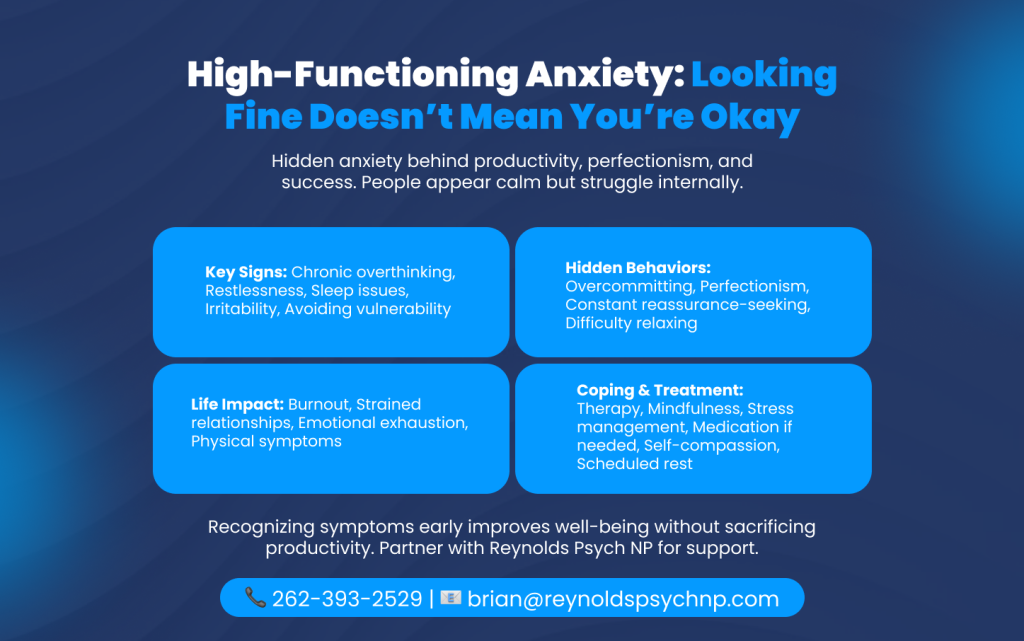
Outward success does not equal emotional well-being. People with high functioning anxiety often develop coping mechanisms that mask symptoms. Productivity becomes a shield that hides deeper mental strain.
Many individuals push themselves to maintain control. They overprepare, double-check work, and avoid situations where failure feels possible. This creates a cycle where anxiety fuels achievement, and achievement reinforces anxiety.
Common Masking Behaviors
- Overcommitting to responsibilities
- Perfectionism disguised as dedication
- Constant need for reassurance
- Difficulty relaxing without guilt
Over time, these behaviors can lead to burnout, strained relationships, and physical symptoms.
Signs You Might Be Struggling Internally
Recognizing the signs of high functioning anxiety is essential for early intervention. Because symptoms are subtle, they often go unnoticed until stress becomes overwhelming.
People may experience persistent worry about small details, fear of disappointing others, or an inability to “turn off” their thoughts at night. Physical symptoms like headaches, muscle tension, or digestive discomfort are also common.
Emotional and Physical Indicators
- Chronic overthinking
- Restlessness or feeling “on edge.”
- Sleep disturbances
- Irritability despite outward composure
- Avoidance of vulnerability
Understanding these signs of high functioning anxiety allows individuals to acknowledge their experiences without minimizing them.
The Difference Between High-Functioning Anxiety and General Anxiety
While traditional anxiety disorders may disrupt daily functioning, high functioning anxiety often coexists with productivity and achievement. This distinction can delay proper diagnosis.
In clinical settings, providers assess symptom patterns during an initial psychiatric evaluation to determine how anxiety presents and impacts functioning. Some individuals describe what they call “high function anxiety,” highlighting how they continue performing despite internal distress.
When Anxiety and Depression Overlap
It is not uncommon for high functioning anxiety and depression to occur together. Individuals may feel exhausted, detached, or hopeless while still meeting obligations.
The coexistence of high anxiety and depression can intensify symptoms. Persistent worry combines with low mood, creating emotional fatigue that becomes increasingly difficult to manage.
Overlapping Symptoms
- Loss of joy in achievements
- Persistent self-criticism
- Emotional numbness
- Increased irritability
This combination can make anxiety harder to identify because depressive symptoms may overshadow it.
Social Pressures and Hidden Distress
Social environments can amplify anxiety. Many people with high functioning social anxiety appear confident but internally fear judgment or rejection.
They may rehearse conversations, avoid social risks, or feel drained after interactions. Despite appearing outgoing, the emotional cost is significant.
High functioning social anxiety often develops in professional settings where expectations for performance and composure are high.
Long-Term Effects of Ignoring High Functioning Anxiety
Ignoring high anxiety can lead to chronic stress, burnout, and even physical health issues. Persistent activation of the body’s stress response affects cardiovascular health, sleep quality, and immune function.
Over time, individuals may question whether anxiety is simply part of their personality. However, untreated symptoms can escalate and impact personal relationships and overall life satisfaction.
Potential Consequences
- Emotional exhaustion
- Increased reliance on unhealthy coping mechanisms
- Reduced work satisfaction
- Strained interpersonal relationships
Seeking psychiatric care early can prevent escalation and promote long-term stability.
Diagnostic Considerations
Mental health professionals evaluate the duration, intensity, and impact of symptoms. A comprehensive psychiatric evaluation explores medical history, emotional patterns, and environmental stressors.
This process helps differentiate between generalized anxiety, high functioning anxiety, and other mood disorders. It also identifies whether symptoms intersect with what some consider the hardest mental illness to live with, such as severe depressive or trauma-related conditions.
Diagnosis provides clarity and direction rather than labels.
Treatment Options for High Anxiety
Effective high functioning anxiety treatment typically combines therapy, lifestyle adjustments, and sometimes medication. Treatment plans are personalized based on individual needs and symptom severity.
Common Treatment Approaches
- Cognitive Behavioral Therapy (CBT)
- Mindfulness-based interventions
- Stress management training
- Medication when clinically appropriate
High anxiety treatment focuses on reducing internal distress while preserving healthy ambition and productivity.
Comparison Table: Visible vs. Hidden Anxiety
| Feature | Traditional Anxiety | High-Functioning Anxiety |
| Work Performance | May decline | Often remains strong |
| Social Presentation | Noticeable distress | Appears composed |
| Internal Experience | Worry & panic | Persistent internal tension |
| Burnout Risk | Moderate | High due to masking |
| Help-Seeking | More likely | Often delayed |
Healthy Coping Strategies
Developing healthy coping mechanisms reduces reliance on perfectionism or overwork. Mindfulness, structured boundaries, and balanced routines help regulate stress responses.
Practical Steps
- Schedule intentional rest
- Set realistic expectations
- Practice self-compassion
- Limit overcommitment
These strategies help manage high anxiety before it becomes overwhelming.
Breaking the Stigma
Many individuals hesitate to seek support because they believe success invalidates their struggle. However, emotional pain does not disappear simply because responsibilities are fulfilled. Acknowledging high anxiety is not a weakness.
It is a step toward sustainable mental wellness. High functioning anxiety treatment can include therapy, lifestyle adjustments, and, in some cases, medication to help manage symptoms, improve coping strategies, and restore balance in daily life.
Seeking professional guidance ensures that high achievers maintain both productivity and emotional well-being without sacrificing one for the other.
When to Seek Professional Help
Consider professional support if anxiety interferes with sleep, relationships, or physical health. Early evaluation allows for tailored intervention before symptoms worsen.
Persistent worry, emotional exhaustion, or coexisting high functioning anxiety and depression are strong indicators that professional guidance may be beneficial.
Final Verdict
High functioning anxiety often hides behind productivity, perfectionism, and outward success. Just because someone looks fine does not mean they are emotionally okay. Recognizing symptoms early and seeking professional support can prevent long-term consequences.
If you are struggling internally while appearing composed externally, Reynolds Psych NP can help. Contact Reynolds Psych NP at (262) 999-7350 or email [email protected] to schedule a confidential evaluation and begin your path toward balanced mental wellness.
FAQs
1. What is high-functioning anxiety?
High anxiety describes persistent internal worry and tension while maintaining external success and responsibilities.
2. How do I know if I have high-functioning anxiety?
Look for chronic overthinking, perfectionism, sleep disturbances, and emotional exhaustion despite strong performance.
3. Can high-functioning anxiety lead to depression?
Yes, high-functioning anxiety and depression often overlap, increasing emotional fatigue and burnout.
4. Is therapy effective for high-functioning anxiety?
Yes, cognitive-behavioral therapy and mindfulness strategies are highly effective treatments.
5. When should I seek help?
If anxiety impacts sleep, relationships, or physical health, professional support is recommended.