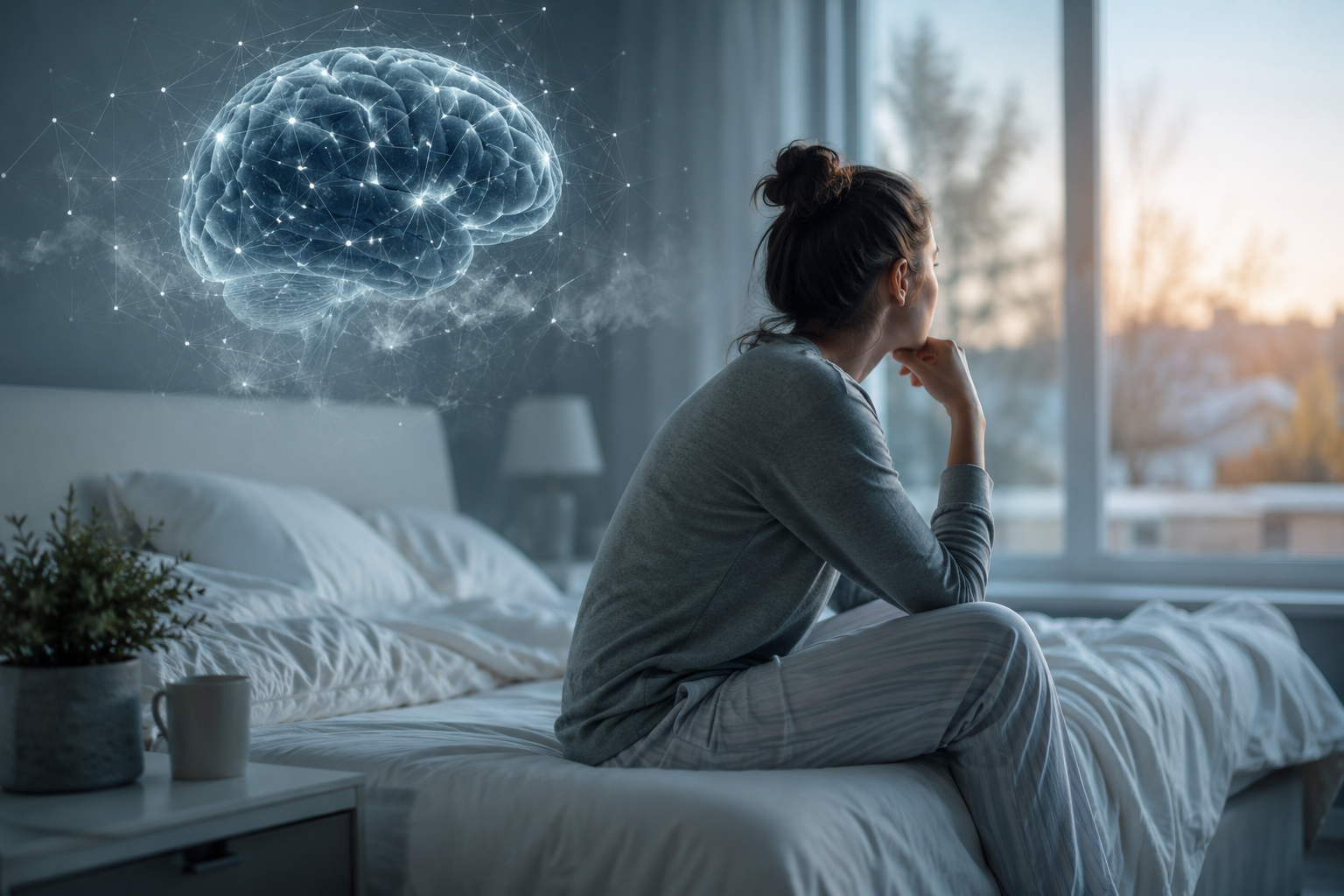
The alarm hasn’t even finished its first cycle, and the worry is already there. Not a thought about the day ahead exactly , more like a low hum of dread that arrives before any actual reason for it. By the time both feet are on the floor, the mind is already several steps into a spiral about a deadline, a conversation, or nothing in particular at all. For a lot of people, this isn’t an occasional bad morning. It’s the default setting.
Morning anxiety is common enough that it has a biological explanation, not just a psychological one , and understanding that difference is often the first useful step toward managing it.
Key Takeaways
- Morning anxiety is partly biological: cortisol naturally spikes shortly after waking, and for some people that spike intensifies anxious thoughts.
- Sleep quality, blood sugar, and the first few minutes of phone or news exposure all shape how anxious mornings feel.
- Persistent, daily morning anxiety that interferes with functioning is worth discussing with a mental health professional, not just managing alone.
Why Anxiety Often Peaks Right After Waking
Morning anxiety refers to a pattern of heightened worry, dread, or physical tension that occurs specifically upon waking or within the first hour of the day, often before any external stressor has actually occurred. It’s distinct from general anxiety in its timing , the intensity is front-loaded into the start of the day and, for many people, eases somewhat as the day goes on.
The Cortisol Awakening Response
There’s a well-documented biological piece to this. Cortisol, the body’s primary stress hormone, naturally rises sharply in the 30–45 minutes after waking , a pattern researchers call the cortisol awakening response. It’s a normal part of human physiology, meant to help mobilize energy for the day. But in people with anxiety disorders or chronic stress, that same hormonal spike can amplify anxious thoughts rather than just providing energy, turning a biological process into a subjectively distressing one.
Sleep Quality’s Outsized Role
Fragmented or insufficient sleep doesn’t just leave a person tired , it directly affects the brain regions involved in regulating fear and threat response, most notably the amygdala. Poor sleep the night before tends to correlate with a stronger anxious response the next morning, creating a cycle where anxiety disrupts sleep and disrupted sleep intensifies anxiety.
Blood Sugar and the First Meal
Waking up in a mildly fasted state after 7–8 hours without food can produce physical sensations , shakiness, lightheadedness, a racing heart , that the anxious mind interprets as danger signals rather than simple hunger. For some people, this physical/psychological overlap is a significant, and fixable, piece of the pattern.
The First Few Minutes Matter More Than People Expect
Checking a phone, scrolling news, or reviewing a packed inbox within the first few minutes of waking gives the nervous system very little runway before introducing new stressors. For someone already primed by a cortisol spike, that’s often enough to tip a manageable morning into an overwhelming one.
What Might Be Driving It, at a Glance
| Contributing factor | How it shows up | A helpful first step |
| Cortisol awakening response | Sudden dread or racing thoughts within minutes of waking | Understand it as physiological, not a sign something is “wrong” |
| Poor sleep quality | Anxiety feels sharper after a restless or short night | Prioritize a consistent wake time, even on weekends |
| Low blood sugar | Physical symptoms , shakiness, racing heart , read as anxiety | Eat something with protein soon after waking |
| Early phone/news exposure | Anxiety spikes further within the first 10–15 minutes | Delay checking phone/email until after a short buffer routine |
| Underlying anxiety disorder | Morning anxiety is persistent, daily, and interferes with function | A professional evaluation to clarify what’s driving it |
A Simple Way to Start Working With It
- Track it for a week. Note what mornings feel worse and whether sleep, food, or phone use seem connected.
- Build a short buffer routine before checking any screen , even five minutes of just being upright and breathing helps.
- Address sleep consistency first. It has the widest ripple effect of any single factor.
- Eat something within the first hour, even something small, if hunger seems to intensify the anxious feeling.
- Pay attention to duration and impact. Occasional rough mornings are normal; a daily pattern that disrupts your ability to function is a different situation.
A Familiar Pattern
Consider someone who assumed their anxious mornings were just “not a morning person” for years , until a stretch of poor sleep made the pattern impossible to ignore. Mornings became genuinely difficult: racing thoughts before the alarm had even stopped, a tight chest by the time coffee was made. What eventually helped wasn’t a single trick, but a combination of consistent sleep timing, a slower first twenty minutes of the day, and , once it became clear the anxiety wasn’t easing with those changes alone , a conversation with a mental health provider about what else might be contributing.
Common Misconceptions About Morning Anxiety
“It’s just not being a morning person.” A natural preference for later mornings is different from a physiological anxiety spike that includes racing thoughts, dread, or physical symptoms like a racing heart.
“If it’s biological, there’s nothing to do about it.” The cortisol awakening response is normal, but the intensity of the anxious reaction to it is very often manageable through sleep, routine, and, when needed, professional treatment.
Do this, not that: Don’t assume persistent morning anxiety will simply resolve with willpower or a better morning playlist. If it’s a daily pattern that’s interfering with your day, that’s worth bringing to a professional rather than managing alone indefinitely.
Talk to Reynolds Psych NP About Ongoing Anxiety
If morning anxiety is a daily pattern rather than an occasional rough start, it’s worth talking to someone. Reynolds Psych NP offers Individual Psychotherapy (CBT), a structured, evidence-based approach that’s particularly effective for anxiety patterns like this. Learn more about our Individual Psychotherapy services, or make an appointment to start with an initial evaluation. Reach our office at (262) 999-7350.
This article is for general educational purposes and is not a substitute for a professional evaluation.
FAQ
Why do I wake up anxious every morning?
It’s often a combination of the natural cortisol awakening response, sleep quality, blood sugar, and how quickly stressors like a phone or news feed enter the first few minutes of the day.
Is morning anxiety a sign of an anxiety disorder?
It can be, especially if it’s a daily, persistent pattern that interferes with functioning , but occasional anxious mornings, particularly after poor sleep, are common and not necessarily a disorder.
What is the cortisol awakening response?
It’s a natural sharp rise in cortisol that occurs in the 30–45 minutes after waking, which can intensify anxious thoughts in people prone to anxiety.
Can poor sleep cause morning anxiety?
Yes , fragmented or insufficient sleep affects brain regions involved in fear and threat response, often making anxiety feel more intense the next morning.
Does eating breakfast help with morning anxiety?
For some people, yes , low blood sugar can produce physical symptoms that mimic or intensify anxiety, so eating something within the first hour of waking can help
Should I check my phone first thing in the morning if I have morning anxiety?
It’s often better to delay it. Introducing new stressors before the nervous system has settled from the cortisol spike tends to intensify anxious feelings.
When should I see a professional about morning anxiety?
If it’s a daily pattern, doesn’t improve with sleep and routine changes, or interferes with your ability to function, it’s worth a professional evaluation.
What treatments help with morning anxiety?
Cognitive behavioral therapy (CBT) is a well-supported approach for anxiety patterns generally, and can be tailored to address morning-specific triggers and thought patterns.
Is morning anxiety the same as a panic attack?
Not necessarily , morning anxiety is typically a lower-grade, sustained sense of dread, while a panic attack is a more acute, intense episode, though the two can overlap.
How can Reynolds Psych NP help with ongoing morning anxiety?
Reynolds Psych NP offers individual psychotherapy and psychiatric evaluations via telehealth for patients in Wisconsin and Illinois, which can help identify what’s driving the pattern and build an effective treatment plan.