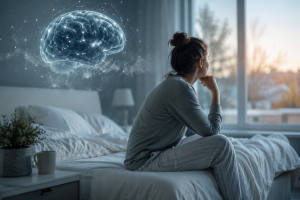

Nothing is wrong, but your body does not believe it.
The room is quiet. The bills are not due today. No one is angry. There is no obvious crisis. Still, your chest feels tight, your mind keeps scanning for a problem, and your body feels like it is waiting for bad news.
That is what makes feeling on edge for no reason so unsettling. It can feel random, confusing, and even embarrassing. People often think, “I should be fine, so why do I feel like this?”
Here is the direct answer: feeling on edge can happen when the nervous system is reacting to stress, poor sleep, caffeine, hormonal changes, past pressure, medical factors, or anxiety patterns before the mind can clearly name the trigger. It does not automatically mean something is wrong with you, but it may be a sign worth paying attention to.
Key Takeaways
- Feeling on edge can come from anxiety, chronic stress, poor sleep, physical health factors, or nervous system overload.
- Anxiety can happen without an obvious trigger, especially when stress has built up over time.
- Feeling anxious does not always mean someone has an anxiety disorder.
- If symptoms affect sleep, work, relationships, or daily functioning, an evaluation can help clarify what may be happening.
What Does Feeling on Edge Mean?
Feeling on edge means the body is in a heightened state of alert.
A person may feel tense, restless, irritable, watchful, jumpy, or unable to relax. Some people describe it as being “wired but tired.” Others say they feel like something bad is about to happen, even when nothing is happening around them.
This feeling can involve both the mind and the body. The mind may race through “what if” thoughts. The body may respond with muscle tension, a faster heartbeat, shallow breathing, stomach discomfort, sweating, trembling, or trouble sleeping.
The National Institute of Mental Health lists feeling restless or “on edge,” trouble concentrating, irritability, muscle tension, fatigue, and sleep problems among symptoms that can appear with generalized anxiety disorder. That does not mean every person who feels tense has generalized anxiety disorder. It means these symptoms are clinically recognized and worth understanding.
Why Do I Feel On Edge for No Reason?
Many people search this exact question because the feeling does not match the situation.
When the mind cannot find a clear reason, it may assume the feeling is irrational. But the nervous system does not only respond to obvious danger. It also responds to patterns, habits, memories, body chemistry, and pressure that has been building quietly.
Common reasons include:
- Stress that has been building in the background
Stress does not always feel dramatic while it is happening. Work pressure, family demands, financial concerns, caregiving, conflict, and constant digital noise can keep the body on alert. By the time the person notices symptoms, the stress response may already be loud. - Poor sleep or an irregular sleep-wake cycle
Sleep affects emotional regulation. When sleep is short, broken, or inconsistent, the body may become more reactive the next day. Small worries can feel larger. Normal responsibilities can feel heavier. - Caffeine, alcohol, or other substances
Caffeine can increase physical sensations that feel similar to anxiety, such as a faster heartbeat or shakiness. Alcohol may feel calming at first, but it can disrupt sleep and increase next-day uneasiness for some people. - The fight-or-flight response
The fight-or-flight response is the body’s survival system. When activated, the sympathetic nervous system prepares the body to act. Adrenaline may rise, muscles may tighten, breathing may change, and the person may feel on high alert. - Anxiety without an obvious trigger
Anxiety symptoms without a trigger can happen when the brain is trying to predict or prevent discomfort. The mind may look for certainty, replay conversations, or scan for risk. This can create an anxiety cycle where the fear of feeling anxious becomes another source of anxiety. - Medical, hormonal, or medication-related factors
Thyroid changes, blood sugar shifts, hormonal changes, medication side effects, and other health factors can sometimes contribute to feeling restless, tense, or uneasy. This is one reason it is important not to assume every symptom is “just anxiety.”
Why Anxiety Can Feel Worse When Life Slows Down
It sounds backward, but many people feel more anxious after a stressful season ends.
During a crisis, the body may focus on getting through the next task. There is no room to process everything. Once life becomes quieter, the nervous system may finally release what it has been holding.
This can happen after a work deadline, a family emergency, a move, a breakup, a health scare, or a long period of emotional strain. The outside world may look calmer, but the body may still be catching up.
That is why “nothing is wrong” does not always mean “nothing has affected me.”
Feeling Anxious for No Reason vs. an Anxiety Disorder
Feeling anxious for no reason does not automatically mean someone has an anxiety disorder.
Anxiety becomes more concerning when it is frequent, hard to control, lasts for a long time, or begins to interfere with daily functioning. For example, someone may start avoiding work tasks, canceling plans, checking symptoms repeatedly, struggling to sleep, or feeling unable to relax even during calm moments.
The difference is not just whether anxiety exists. The difference is how much space it takes up.
According to the National Institute of Mental Health, an estimated 31.1% of U.S. adults experience an anxiety disorder at some time in their lives. That statistic matters because it reminds people that anxiety is common, but it should still be taken seriously when it affects daily life.
What This Means for Patients
Feeling on edge is not a character flaw.
It is not proof that someone is weak, dramatic, or broken. It is a signal. Sometimes that signal points to stress. Sometimes it points to sleep problems. Sometimes it points to anxiety, depression, PTSD, ADHD, panic disorder, adjustment disorder, or another concern. Sometimes it points to a mix of emotional, physical, and lifestyle factors.
The most helpful next step is not self-judgment. It is careful observation.
A person can start by asking:
- When does the feeling show up?
- Is it worse in the morning, at night, or before certain responsibilities?
- Does caffeine, alcohol, poor sleep, or skipping meals make it worse?
- Are there racing thoughts or a constant feeling of dread?
- Is the feeling affecting work, relationships, or daily routines?
- Is avoidance starting to shrink life?
These questions do not diagnose anyone. They help create a clearer picture.
A Simple Way to Respond When You Feel On Edge
When the body feels alarmed, the goal is not to argue with it. The goal is to help it feel safer.
Try this simple framework: Pause, Name, Support, Decide.
- Pause
Take one slow breath before reacting. This gives the brain a moment to shift out of automatic alarm mode. - Name
Use plain language. “This feels like anxiety.” “This feels like stress.” “This feels like my body is on high alert.” - Support
Choose one body-based support. Drink water, eat something steady, stretch your shoulders, step outside, lower caffeine, or use slow breathing. - Decide
Ask, “What is one realistic next step?” Not ten steps. One. Send the email. Take a shower. Write the concern down. Call for support. Go to bed on time.
Small actions can help because they give the nervous system a clear message: something is being handled.
Common Symptom Patterns and What They May Suggest
| Symptom Pattern | Possible Driver | What May Help | What Not to Assume |
| Waking up feeling on edge | Poor sleep, morning cortisol rhythm, worry, or stress buildup | Track sleep, caffeine, alcohol, and morning thoughts | That the whole day is already ruined |
| Feeling on high alert for no reason | Hypervigilance, trauma stress, chronic stress, or anxiety patterns | Notice triggers and create safety cues | That you are “overreacting” |
| Feeling tense and unable to relax | Muscle tension, stress response, or anxiety cycle | Gentle movement, breathing, and consistent routines | That relaxation should happen instantly |
| Racing thoughts and anxiety | Worry, uncertainty, or attempts to regain control | Write down the concern and one next step | That every thought deserves a debate |
| Physical symptoms of anxiety | Nervous system activation or other health factors | Discuss repeated symptoms with a provider | That all physical symptoms are harmless or anxiety-only |
What a Psychiatric Provider May Look At
A psychiatric provider does not only ask, “Are you anxious?”
A careful evaluation looks at the whole picture. This may include current symptoms, how long they have been happening, sleep patterns, appetite, energy, mood, focus, medical history, medications, substance use, trauma history, family history, work stress, relationship stress, and daily functioning.
The purpose is not to label someone quickly. The purpose is to understand what may be contributing to the symptoms and what support may fit.
For someone who has been feeling on edge all the time, an initial psychiatric evaluation can help identify whether symptoms may be related to anxiety, panic symptoms, depression, ADHD, PTSD, sleep issues, medication concerns, or other factors.
This type of evaluation can also help determine whether treatment options such as psychotherapy, cognitive behavioral therapy, behavioral interventions, lifestyle changes, or medication-focused care may be appropriate.
What Not to Assume
There are a few assumptions that can make anxiety feel worse.
Do not assume feeling on edge means you are broken.
Anxiety is a human response. It may become disruptive, but the feeling itself is not a personal failure.
Do not assume every symptom is “just anxiety.”
Physical symptoms should be taken seriously, especially if they are new, severe, or unusual.
Do not assume support means medication is automatic.
Medication may help some people, but care should be based on the individual. A provider may discuss several support options depending on symptoms, history, goals, and safety.
Do not assume you need to wait until life falls apart.
Support can begin when symptoms are interfering, not only when there is a crisis.
Do not assume avoidance is harmless.
Avoidance can bring short-term relief, but over time it may make anxiety feel more powerful. Life can become smaller without the person noticing at first.
When Should You Seek Professional Help?
Professional help may be worth considering when feeling nervous for no reason becomes frequent, intense, or hard to manage.
It may also be time to speak with a provider if symptoms interfere with:
- Sleep
- Work responsibilities
- School
- Parenting
- Relationships
- Appetite
- Concentration
- Driving
- Social life
- Daily routines
It is especially important to seek immediate help if someone feels unsafe, has thoughts of self-harm, experiences severe chest pain, fainting, trouble breathing, or symptoms that could be medical. In a mental health crisis, the 988 Suicide & Crisis Lifeline offers free, confidential support in the United States.
Treatment Options That May Help Reduce Anxiety Symptoms
Treatment depends on the person. There is no one-size-fits-all plan.
Some people benefit from therapy that helps them understand thought patterns, avoidance, emotional regulation, and symptom triggers. Cognitive Behavioral Therapy can help people notice anxious thoughts and respond differently. Mindfulness and breathing exercises may support nervous system regulation. Sleep routines, reduced caffeine, movement, and daily structure may also help.
For some people, medication management may be part of the treatment plan. This does not mean medication is the only answer. It means a qualified provider can review symptoms, medication history, side effects, response, and safety to determine what may be appropriate.
For patients who prefer remote care or need more flexible access, telehealth services may allow psychiatric support from a private setting when clinically appropriate and available based on location and licensing.
How Reynolds Psych NP Fits Into the Next Step
Reynolds Psych NP provides personalized psychiatric care with a focus on compassionate support, evaluation, treatment planning, follow-up care, and whole-person mental health needs.
For someone experiencing unexplained anxiety symptoms, the next step is not to panic or self-diagnose. The next step is to get a clearer understanding of what is happening.
A psychiatric evaluation can help connect the dots between symptoms, stress, sleep, health history, emotional patterns, and daily functioning. From there, the provider can discuss support options that may fit the person’s needs.
If symptoms are affecting work, daily routine, relationships, or emotional stability, call (262) 999-7350 or email [email protected] to ask about care options.
Conclusion
Feeling on edge can be frightening because it often feels like the body is sounding an alarm without explaining why.
But the feeling is not meaningless. It may be connected to stress, poor sleep, caffeine, physical health factors, past pressure, anxiety patterns, or a nervous system that has been alert for too long.
The goal is not to shame the symptom or force it away. The goal is to understand it. When feeling on edge for no reason keeps happening or starts affecting daily life, a psychiatric evaluation can help turn confusion into a clearer plan.
You do not need to have everything figured out before asking for support. That is often what the first step is for.
FAQ
Why do I feel on edge for no reason?
You may feel on edge because your nervous system is responding to stress, poor sleep, caffeine, health factors, hormonal changes, or anxiety patterns that are not obvious in the moment.
Can anxiety happen without a clear trigger?
Yes. Anxiety can happen without a clear trigger because the body may react to stored stress, uncertainty, or past patterns before the mind can identify a specific cause.
What does feeling on edge mean?
Feeling on edge means your body is in a heightened state of alert. You may feel tense, restless, jumpy, irritable, uneasy, or unable to relax.
Is feeling on edge always anxiety?
No. Feeling on edge can be related to anxiety, but it may also be linked to sleep problems, caffeine, stress, medication effects, medical concerns, or life changes.
What causes a constant feeling of uneasiness?
A constant feeling of uneasiness may come from chronic stress, ongoing worry, poor sleep, trauma-related alertness, physical health factors, or anxiety symptoms that have built over time.
What are symptoms of generalized anxiety disorder?
Generalized anxiety disorder may involve ongoing worry that feels hard to control, restlessness, fatigue, trouble concentrating, irritability, muscle tension, and sleep problems.
Can poor sleep make you feel on edge?
Yes. Poor sleep can make the body more reactive and reduce emotional steadiness, which may make normal stress feel harder to manage.
How is anxiety diagnosed?
Anxiety is diagnosed through a clinical evaluation that looks at symptoms, duration, triggers, functioning, medical history, medication use, and whether another condition may be contributing.
What happens during an Initial Psychiatric Evaluation?
During an initial psychiatric evaluation, the provider asks about symptoms, history, sleep, mood, stress, safety, medications, and goals so they can better understand what support may be appropriate.
Can telehealth be used for psychiatric evaluations?
Yes, telehealth may be used for psychiatric evaluations when appropriate, depending on the provider, patient needs, location, privacy, and clinical situation.